
Information and Electoral Accountability Project, Voter Education, Election Monitoring, Election Intergrity, Citizen Engagement Tel: +447960925691. E-mail: theleadprojectfoundation@gmail.com. Informed Voters Elect More Qualified Candidates. Choose Your Leaders Well. It's Easy Enough To Get Misled, We All End Up As Losers. The LEAD Project Foundation-Leadership, Empowerment, Advocacy, Development is a Non-Political, Non-Profit Organisation.
Tuesday, 30 June 2020
The LEAD Project Foundation: Nigeria: The Country We're In - 'Capture, Corrupti...
The LEAD Project Foundation: Nigeria: The Country We're In - 'Capture, Corrupti...: "Shockingly for a commonwealth country, Nigeria ranks 12th on the Open Doors World Watch List 2020 of countries in which Christians are...

Saturday, 27 June 2020
Nigeria's Illusive Democracy

"While we look at the screens of our televisions and mobile phones, others with agendas have their fingers in the pockets of our democracy, on the steering wheel of our democracy, on the keys to our democracy, on the credit cards of our democracy"-Professor A.C. Grayling.
Citizens embrace democracy with reasonable expectations that it will deliver a better quality of life. However, when it fails to deliver these benefits, people lose faith in democracy. The truth is in Nigeria, people are deprived of a voice in the government of their lives so its hard to describe what is happening in Nigeria as a workable democracy.
According to Professor A.C. Grayling; "the idea of democracy is that it is a political order in which government is chosen and given authority by the periodically, freely and fairly cast votes of the enfranchised members of the populace, who have a real choice as to whom to give their vote. A set of civil liberties is essential to the operation of democracy, such as freedom of expression, the right to assembly, and liberty in respect of political choices.
The mechanisms by which the government is thereafter constrained in what it can do, are highly important" He concluded that three further intimately connected essentials-'the proper operation of the democracy, the quality of the electorate, and the quality of the elected' would close the gap between aspiration and nearest thing to the ideal that humanity can achieve in this sphere. Thus, "it is in the breakdown of these further essentials that the crisis of contemporary democracy consists".
My first attempt to investigate democracy crisis in Nigeria which i described as 'bribe and bullet' endorsed above explanations without any iota of doubt. Failing democracy in Nigeria is as a result of the great disconnect among the three essentials-the political system, the political actors and the people-'capture, corruption, coercion'. My focus will be a brief explanation of what has transpired from the return to civil rule in 1999 till date and what can be done to reclaim democracy in Nigeria and make it achieve its purpose of liberty and freedom as in the words of Professor A.C.Grayling; "worked out by some of the best minds in the history of our civilization"(P.11).
*The Dubious Political System: Writing on NewYork Times; 'Lessons From Nigeria's Militarized Democratic Experiment' on October 9 2019, Professor Wole Soyinka has this to say about Nigeria's Political system ; "Nigeria's current Constitution, a parting gift from the military that ruled the nation for nearly four decades after its independence from Britain in 1960, was released to the public on May 29, 1999. The document was significant in one respect: Other than the conscripted drafting team, no one had previously set eyes on its contents.
As Rotimi Williams, one of Nigeria's most revered legal minds, once declared, even the Constitution's preamble began with an ergregious lie, with that ritual attribution "We the People..." It is no surprise then that the Constitution bequeathed by the Nigerian military 20 years ago marked a total repudiation of the less-centralised federalist structure that was the driving principle, agreed to after tough negotiations, of prior constitutional conferences in Nigeria and Britain. Ironically, one of the proclaimed justifications for a counter-coup in July 1966 was the aim of reversing the centralization decrees that had gathered the security arms, civil service, judiciary and other state structures under one command".
While Nigerian diarchy operates mostly in covert fashion, the military does not hesitate, when required, to declare openly where the real power lies", he concluded. The dubious constitution must be addressed by a constitutional settlement that has the will of the whole society.
Similarly, Professor Akin Oyebode, a Constitutional law expert described Nigeria's Political System as "very dysfunctional, counter -productive. Assessing the nation's democracy since 1999, Professor Oyebode said ; "I think this is a work in progress. The question of the Nigerian political system ; it's problematic, it's an ongoing issue" He concluded that the country needs a new constitution to enable a proper and transparent democracy. He mentioned that he was among the over 400 delegates who attended the 2014 National Conference(CONFAB) organised by former President Goodluck Jonathan. According to him; "the question of the nature of the polity and what needed to be done to ameliorate its dysfunctionality resonated very loudly at the event, but nothing has yet to be done six years later.
He said ; "The CONFAB came up with over 600 resolutions, but nothing has been done to date to effectuate those recommendations which would have made the Nigerian polity a little bit easier to understand to enhance its functionality. If you don't want to touch the recommendations of the CONFAB, then you need another forum, not the National Assembly. The National Assembly is to make laws for the peace, order, and good governance of Nigeria; it is not a constituent assembly. It is neither the place nor the role, or function of the National Assembly to give us a constitution. The word restructuring might be problematic to some people but to most objective observers, the system we are operating is very dysfunctional and counterproductive".
Furthermore; Dr Nina Nwodo, President General of Igbo Apex Organisation, Ohaneze Ndigbo reiterated the urgent need for a new constitution that can help grow democracy in Nigeria. In his own words; "our country is operating on an illegal constitution because the constitution lacks autochtony. We never made a constitution for Nigeria, the military gave it to the country. The composition of its legislative body was chosen by a parameter not known to anybody. They wrote a constitution and abandoned the agreement our forefathers had with the British government for a regional based government, in which every region had its own security, economic development and sovereignty over its natural resources and pay tax to the central government.
Ninety percent of the heads of security personnel in the South-East are non-indigenes. And we know all over the world that local policing is the trend today. You have to know your local territory and speak the language to the police chief. Those people don't speak the language and are not from there. They look like those posted to superintend over the colonial arrangement. This situation is threatening the very fabric of our nation." He therefore stressed that Nigeria must restructure the country and have a constitution that is autochthonous. "A constitution that is made by the people and backed by a plebiscite voted by the people" .
No doubt it would be very difficult to have a proper and transparent democracy in Nigeria without addressing the root cause of the problem. *The Political Actors-PDP vs APC: I described PDP vs APC political parties as 'putting a lipstick on a pig, its still a pig' ,whereas the PDP tried to solve the problem by changing the question rather than addressing the root cause of the problem, the APC was a 'Mistake of Destiny', a tragic story of the supreme power of politics to destroy collective life, economy and the society.
Rule by angry people, wrong hands, human hands, very bad tyranny; division, ethnic discrimination, exploitation and domination, terror, and economic violence, seeking to use state power to impose a particular ideology on the rest of the society. According Ex-President Olusegun Obasanjo; "No Nigerian State is Safe, Secure Again. Now, no part of the country can claim to be safe from the menance and insecurity caused by terrorists, armed robbers, human traffickers, kidnappers of all sorts, cattle rustlers, insurgents, bandits and herders/farmers conflicts".
Similarly, the UK All -Party Parliamentary Group for International Freedom of Religion or Belief has just published a report entitled 'Nigeria-Unfolding Genocide' accusing the Federal government of inaction in protecting Christians and Ethnic minorities in Nigeria. It's a big badge of shame the country finds itself in this situation.
This government dramatically demonstrate how anti-democratic elements that achieve power democratically can destroy the very democracy that empowered them. Under this government, the country has fulfilled all the requirements of state failure-lawlessness, failed elections, abuse of power and attack on civil liberties, tyranny, eroding democratic institutions and checks and balances including the judiciary, collapsed economy, endangered society, this is a very bad omen and mockery of democracy.
In another report, Ewelina U Ochab, writing for Forbes Magazine, reported that "Fulani militia continues to perpetrate mass atrocities in Nigeria's Middle-Belt and their crimes continue to go unreported. How will the Nigerian government explain the mass killings in Nigeria as recorded by several International organisations? What is the Nigerian government doing to ensure that the acts are investigated and the perpetrators prosecuted".
A government that has refused to call the enemy by its name cannot hide from history. What is the point of democracy if it cannot guarantee citizens security and prosperity. Dr Nina Nwodo described the political parties as 'companies owned by share holders'. "Our political parties are like companies owned by shareholders where there is no freedom to choose candidates, no transparency in nomination process. you need to have a god father to win a nomination to enter any legislative houses or executive office. Our electoral system is the most corrupt in the world. This is the only country in the world where you go for an election and the adjudication of the judiciary on the outcome of an election lasts up to one year. And in the process, our judiciary is corrupt. In the process, our police men break into a polling booth and cart away polling bags and papers in broad day light. It is recorded in cameras and nobody does anything about it.
It is very often noticed in Nigeria that people lose election and still win because their names are recorded as having won. The confidence of an average Nigerian in the electoral process is gone, to make matters worst and that is the kernel point".
*The People-Ignorant and Impotent Majority persuaded by identity and propaganda: Freedom is not freely given by the oppressors, freedom is taken. There is a popular saying; "Your rights will not be handed to you. You're going to have to request them by going out into the streets". There is Power in Protest. Pressure works. Again, in the words of Professor Paul Collier; Our politicians would only move beyond gestures once there is a critical mass of informed citizens".
Education is the only solution to the dilemma of democracy, all the philosophers say so and we are all stakeholders in this regard. This blog is an attempt to raise awareness to help inform and inspire people to demand change from the 'few'-wielding immeasurable wealth and power to deepen the mess we're in. At stake is whether, there will be democracy in the near future. There are several suggestions out there about the future of government in Nigeria, however, there is nothing to suggest that the government would let the peoples' voice count.
I think It's very imperative to conclude this little piece with Professor Wole Soyinka's final conclusion on the state of democracy in Nigeria; "Nigeria is now witnessing an illusive democracy hoisted by the tyrannical regime of President Buhari. The government is worst than any military junta we have ever seen in this country. It's high time progressive Nigerians rise up and vehemently resist this despotic and macabre government. The Ekiti and Osun jungle elections are a good pointer.
Nigeria belongs to all of us and we must protect this country and our democracy"
Democracy requires Committed Democrats, People of Expertise and experience and Educated Educated Electorate. Civic and Moral Education is very important for the health of democracy and The LEAD Project Foundation is actively involved in this regard.
Uche Okeke is the Founder of The LEAD Project Foundation. He lives in London.
The Prosperity Challenge in Nigeria- Uche Okeke
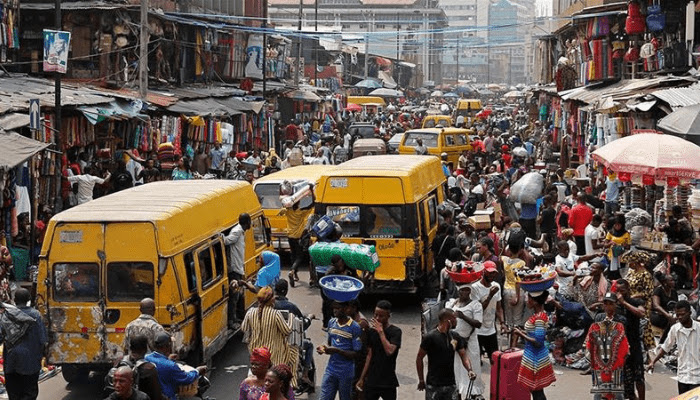
"Faced with the crisis of pandemic disease, economic collapse and racial injustice, we must make a choice to remake society and its systems to make it just and equitable, a society that provides for all and affirms in practice the fundamental value and dignity of every life. Education, Healthcare, Justice, the Economy, Environmental Protection and the basic frameworks of rights and freedoms that some of us take for granted and others have never enjoyed-all these must be made more just and equitable"-Social Progress. Photo: Google Image.
In Nigeria, wealth in natural resources has not translated into prosperity for the country and its citizens, due to 'capture, corruption and coercion'. what happens without oil remains a huge question especially as the world is seeking to de-carbonise the economy by 2050, this would mean less oil revenues for oil economies like Nigeria. Whereas the global conversation has shifted from achieving economic growth to prosperity, neither is the case currently in Nigeria, something must be done about it.
Poor Societies stuck on the ground must learn to abandon barbaric ideas that create misery and discontent and think about 'prosperity -well-being and environment'. There are preconditions for growth especially in the modern era. Nigeria's Unitary Centralised Political System is the wrong model for success it must be overhauled to drive Social Progress. Social Progress requires new thinking not same old style.
Nigeria ranks 129/149 on Basic Human Needs on the 2019 Social Progress Index, relatively poorly, Personal Safety, freedom and choice, very poor, inclusiveness very poor, health and wellness, very poor, etc. Click on this link to see the report: https://www.socialprogress.org/?tab=2&code=NGA . The Social Progress Index measures progress in three dimensions: a)Basic Human Needs, b)Foundations of Well-being and c)Opportunity. The classification is as follows: *Basic Human Needs, Foundations of Well-being, Opportunity,Water and Sanitation, Access to Information and Communications, Personal Freedom and Choice, Shelter, Health and Wellness, Inclusiveness, Personal Safety, Environmental Quality, Access to Advanced Education.
I read a report about Britain's Supreme Court hearing Nigerian farmers and fishermen appeal to pursue claims against oil major Shell BP over spills in the Niger-Delta. According to DW Africa; The Ogale and Bille communities allege that Shell's oil operations have polluted their land and waters. They are seeking justice through British courts because cases heard in Nigeria can take decades to resolve, this should be a huge cause for concern.
Few elites with access to wealth and power take decisions that impoverish lives and create disillusionment and disharmony in the society. In 1999 the focus was a return to civil rule, today it has to be upgraded for the 21st century by focusing on progress and economic welfare, citizens well-being, equity and justice. People everywhere can build a more hopeful and prosperous future if they embrace a better 'value system' rather than being preoccupied with 'materialism', of-course, prosperity is not 'materialism'.
"Does everyone in the society have the basic needs of survival-food, water, shelter, safety, rights, freedom of choice". How can we improve the quality of life for all not just a few people, How can we drive inclusive growth and sustainable prosperity, How can we guarantee citizens security and prosperity, How can we build world class infrastructure and social services including education and healthcare, affordable housing for all, well paying and sustainable jobs, How can we build a prosperous and inclusive future for citizens and make sure people are not left behind should be the priority not Guardian of the society nor divine rights to rule.
The focus should be 'flourishing and prospering'. The country must be committed to approaches that drive social progress and advance the Sustainable Development goals. How is the economy progressing? How is the society progressing? There is a huge disconnect. "Prosperity is promised, but insecurity, desperation and in-work poverty grows"-Institute for Global Prosperity(IGP). If the system is not working we need something else.
We need to change the dysfunctional system that creates persistence of poverty and stagnation with a new model for "well-being and flourishing", something that will really address the question of the quality of peoples' lives, something that will produce societal progress. The monstrous unitary centralised political system has failed to address the question of the quality of people's lives, well-being and flourishing, today we need an alternative to guarantee a sustainable prosperity.
We need to change the system that creates dysfunction and takes power away from people in their everyday lives."A value system that is preoccupied with possessions and the social image they project", must be abandoned. Building prosperous lives in Nigeria requires a new approach. In the words of great Einstein; "Insanity: doing the same thing over and over again and expecting different results" The present system benefits only a few, something must be done about it.
What Works: Social Progress requires change. Change needs action. Pressure works, the question is are we ready to take action. People are not as ignorant and impotent as the politicians think if they can discover their people power and the willingness to get off the hook of "Stockholm syndrome"-identity and narratives, propaganda and ideologies that held them down.
Wikipedia defines Stockholm Syndrome as a condition in which hostages develop a psychological alliance with their captors during captivity.
"Our politicians would only move beyond gestures once there is a critical mass of informed citizens"-Professor Sir Paul Collier. One thing is for sure, change happens whenever we are ready. Peace and well-being, overall socio-economic well-being and stability requires a new conversation.
Let me conclude this with a remark from the Institute for Global Prosperity; "A basic level of material consumption is needed to lead a dignified life, However, when materialism becomes a guiding principle, this rarely leads to growth in well-being, and often leads to people being less happy. If this is the case, as so much evidence suggests, it shows the need to have a new conversation about prosperity".
I think this is the great challenge, how to achieve good life for citizens and eliminating obstacles to 'flourishing and thriving' despite wealth in natural resources in their own country. Prosperity is not just about income rather 'happiness and well-being, about quality of life and well-being in our communities, and our families and our sense of security', these are things that really matter not just elections every four years.
We have been told that the 21st century presents a lot of challenges especially 'unprecedented' increase in human population to about 10 billion by 2050 and climate change, so "ensuring these people can thrive, not just survive, is the ultimate challenge of the 21st century"-UCL Institute For Global Prosperity. Everyone a change maker. Change Makers are needed now more than ever to help inform and inspire common action to improve lives and help save the planet. I think we are all stakeholders in this regard.
The world has changed and we cannot afford to be left behind. The policy makers in Nigeria must key into the new global renaissance and direction on how to ensure that people "flourish in a sustainable way and lead good, productive lives". Peace and Prosperity rather than Destruction and Anarchy as we are currently witnessing-senseless killings is not the future. "Prosperity is about improving people's quality of life and their ability to flourish as individuals and communities".
Rwanda is a shinning example despite lack of wealth in natural resources, leveraging boom in foreign direct investment to build a platform for sustainable development. In Nigeria foreign direct investment is in decline with the country's rich seeking investment havens overseas due to insecurity, fear and terror, lack of essential infrastructure and social services and hostile political climate.
Uche Okeke is the Founder of The LEAD Project Foundation. He lives in London. He has participated in 'Global Prosperity Beyond GDP', University College London, UCL.
Sunday, 21 June 2020
Restructuring Nigeria is about a 'fairer society and a stronger economy'- Uche Okeke

The LEAD Project Foundation has been a leading voice in advocating for the restructuring of the monstrous political structure that promotes abuse of power and persistent of poverty and stagnation in Nigeria. Our investigation of Nigeria's democracy and its crisis identifies 'capture, corruption, coercion' as the political economy problem of the country. A dubious political system, toxic political players , ignorant and impotent majority persuaded by propaganda and identity narratives. This is a tragic mix.
No doubt, the unitary centralised political system-expensive, wasteful, dictatorial/tyrannical is the root cause of the country's sad story, a clear manifestation of how human stupidity affects society and economy. The focus was neither 'economic efficiency and social equality' rather exploitation and domination, luxury and adorenment , the licence to do as one pleases as events of recent times have clearly revealed. The truth is such idea is unsustainable and creates more harm than good. According to Wikepedia, the concept of restructuring is "the act of reorganizing the legal, ownership, operational or other structures of an entity for the purpose of making it more profitable, or better organized for its present needs"
The aim is to reduce costs, to make better use of talent and diversity, to improve competitive advantage of the states if possible merge some states that were created for political purposes that are now unproductive and unsustainable, decrease or consolidate debt, encourage innovation and competition among the states to guarantee citizens security and freedom. The benefits of restructuring Nigeria are numerous given the experience of nearly six decades of meaningless and counter-productive unitary centralised political system.
Restructuring Nigeria is about reviving a declining country to increase its value , reposition it for growth and make it more responsive to its challenges of improvement of overall citizens well-being. Restructuring Nigeria is about devolution of power and responsibilities to states to enable them deliver sound government including the capacity to deliver world class infrastructure and social services including education and healthcare services , job creation and overall poverty reduction. Similarly restructuring the country will help the country's diversification efforts to become effective and efficient and more successful.
The current security challenges in the country is a constant reminder of in-effective central system seeking ethnic domination using federal power to reduce other ethnic group influence. A system where state governors are mere Chief Executives without power. In what I described as lamentations of executive Governor in Nigeria, Alhaji Masari declared that he has failed to protect his people. "I cannot look my people in the eyes, I have failed to protect them"
Definitely, the security crisis in the country hightened by influx of foreign Fulani herdsmen who now occupy forests in various states unleashing terror, madness and mayhem despite the country's land-act laws to protect indigeneous peoples' rights and inability of the state governors to protect their citizens further highlights the urgent need for greater devolution of power and resources to states/regions. No doubt, Federal power duplicates autonomous functions, waste resources, kill independence, energy and hard work, promotes unnecessary competition at the center, sycophancy, corruption and political clientellism.
Restructuring Nigeria is about limited government, 'cutting administrative and operational costs in response to a downturn or anticipated downturn in revenue or margins' as we are currently witnessing during the pandemic period. Restructuring Nigeria is not about secession as interpreted by power holders to maintain the status-quo. Restructuring Nigeria implies a major shift from the status-quo, "major change as opposed to a subtle improvement"
The current government has plunged the country into huge and irredeemable debts that will hunt the country for a long time and there is nothing to show for it, just white elephant projects , even excluding some states in supposed investments that will involve them in the future loan repayments, so restructuring Nigeria is about limiting abuse of power, unnecessary politicisation of public policies and limiting financial harm inflicted on the country through reckless executive power. Recently Atiku Abubabakar, the opposition PDP presidential candidate raised alarm about Nigeria's debt crisis.
According to him; "the country cannot be rubbing its children to pay for its greed. The country cannot be on the verge of economic ruin, while still maintaining a Presidential Air fleet that has more planes than the Presidential fleets of those from the countries we take loans from. In his own words; "revelation from Nigeria's first quarter 2020 financial reports in the Medium Term Expenditure Framework and Fiscal Strategy from the Federal Ministry of Finance, Budget and National Planning, shows alarmingly, that whereas Nigeria spent a total sum of N943.12 billion in debt servicing, the Federal Government's retained revenue for the same period was only N950.56 billion. This means that Nigeria's debt to revenue ratio is now 99%. He warned that the country is at a 'precipice'. "No one should be deceived. This is a crisis! Debt servicing does not equate to debt repayment.
The reality is that Nigeria is paying only the minimum payment to cover our interest charges, the principal remains untouched and its possibly growing. If our revenue figures do not go up, and go up quickly, Nigeria risks a situation where our revenue cannot even sustain our debt servicing obligations, meaning that we may become insolvent, and our creditors may foreclose on us, as has occurred in Sri-Lanka and the Maldives" It will be recalled that he had also written in opinion editorial of December 17 2019, titled Endless Borrowing Will Lead Nigeria to Endless Sorrowing'
Lastly, he warned that "Nigeria is facing a crisis, and we cannot continue to keep up appearances by taking out more loans to prop up our economy. This would amount not just to robbing Peter to pay Paul, but to robbing our children to pay for our greed" It's on record that Nigerian legislators are one of the highest paid in the world receiving a monthly salary of $37,000 per month whereas the minimum wage is N30,000.00, less than $75 dollars in-addition to other executive rascalities that has created deep inequality in the society. Nigeria being a mono-economy does not need a bogus and tyrannical unitary centralised political system, people need liberty, freedom and autonomy to become more productive and competitive.
Furthermore, Mohammad Sanusi, immediate past Emir of Kano and former Governor of Central Bank of Nigeria has also warned that Nigeria's governance structure is set up for bankruptcy. According to him; "it is inevitable for Nigeria to be bankrupt with its current governance structure" He described the current structure as "too expensive and unsustainable" He has been very outspoken about the cost of governance in the country and said with the fiscal crisis the country is facing and looking at where Nigeria is headed post COVID-19 crisis, it has become imperative for Nigeria to ask fundamental questions about the structure of its federation. Speaking at a webinar hosted by Emmanuel Chapel on 'Mitigation of the Economic Impact of COVID-19 and the Path to Recovery', Sanusi said when he was the Central Bank Governor, the price of oil was over $100 per barrel, the government at the time spent Eighty-percent of its revenue on salaries and overheads. "Now I'm sure that with the shortfall in revenues and where oil prices is after debt service, we probably have to borrow to pay salaries. We have got to look at the structure"
He stated further, "If you have a company and you have extremely high overheads and you need a high contribution margin to break even, you would be looking at how to reduce cost. So, we have a constitution that says we should have a president and a vice president, we must have a minister from every state of the federation, whether or not it's thirty-six ministries, we should have 109 Senators and 360 members of the House of Representatives. It also said we should have thirty-six governors, thirty-six deputy governors, each state with its House of Assembly and comprising many legislators, 774 local government Chairmen, Councillors, the personal assistants and special assistants(at all levels), staff members and vehicles"
The good thing is the current structure was a military idea that is anti-growth , seeking a militaristic empire and no longer relevant in the modern era, even before the COVID-19 exposure so it requires immediate overhaul despite unnecessary pranks and politik by the current APC government playing endless political football with the future of more than 200 million people in Nigeria. Restructuring is inescapable because the current system does not hold further promise of a better future. The unitary centralised political system is the creation of unthinking individuals obsessed with fascist ideas of the 19th century domination of one group by another. A feudal empire seeking allegiance rather than individual liberty and freedom.
Today is about freedom and autonomy agenda and we must embrace it. The current structure is the root of all the country's problems- division, poor leadership, weak institutions, economic violence, persistence of poverty and stagnation. It must be dismantled to address the inter-connectedness of trust, governance and growth. Adapt or perish is a well known phrase, "now as ever, is nature's inexorable imperative.
This line addresses the fact that the world is constantly changing, requiring those who do not wish to be left behind to change along with it"-HG Wells famously wrote in 1945. Empires belonged to the past and the future is nation states. Nation states are built in equity and justice not unity and continuity regardless of inequity and injustice. A house or business built on a weak foundation will definitely fall. A national dialogue is very important and imperative for a new constitutional settlement that will address the concept of harmonious society and help the country to flourish.
Society is a moral phenomenon and membership of every society is defined on equity and justice which restructuring seeks to achieve. The people that share the territory will definitely decide the future they want not to be determined by a hand full of military junta. Nigeria desperately need a new constitution that has the will of the whole society on how they will be governed and decisions taken on their behalf. The truth is those who resist restructuring are the very people that need it most, unfortunately they dwell in the past driven by barbaric ideologies of the very people who keep them impoverished. The world has changed and we must adapt to the new world of freedom and autonomy. Change is happening so fast that those who hold back, even a little will be left behind as HG Wells rightly stated . "Now more than ever you must be innovative and creative to survive"
Lastly, the current APC government has helped made restructuring very imperative as it has laid bare the gross abuse of the monstrous unitary centralised system for all to see. Restructuring is driven by a need for change. Restructuring Nigeria is a development intervention whose time has come and there is nothing anyone can do about it. Restructuring is the future and will definitely drive future politics in Nigeria. Restructuring not the next election is the answer to Nigeria's multifarious problems, even elections depend on restructuring to become successful. Infact restructuring is citizens rights.
Restructuring Nigeria is about repositioning for citizens security and prosperity, indigenous peoples' rights, limited government and cost reduction, abuse of power and the licence to do as one pleases, economic diversification, improve competitive advantage, greater devolution of power and responsibilities, greater citizen engagement, greater economic and political rights, better citizenship and diversity, constitutional settlement or addressing the legal structure of the country we share, 'economic efficiency and social equality' , turnaround, proper and transparent democracy, sound government and stability in Nigeria.
What can ordinary people do. They need information and awareness to demand change. This blog is an attempt to change the narrative of the political actors who benefit from the impunity of the dysfunctional system and inspire ordinary people to put pressure on the politicians to restructure the country for the betterment of our collective lives. Pressure works and democracy recognises this fundamental human rights to effect change.
Let me conclude with some remarks from President Buhari's speech at the United Nation's General Assembly-UNGA-72; How to restructure the United Nations should be our priority number one. In his own words; "to restructure or not to restructure is no longer the question, the United Nations must be restructured to remain relevant in years to come. Several ideas are out there, all we need is to get them out together and agree on what works for the majority of the people around the world"
My take is charity begins at home, the 2014 National Confab which has input from well constituted assembly of all the stakeholders in the Nigeria project, Nigerians from all the ethnic groups in the country , the ideas they provided should be implemented. Meanwhile restructuring was election campaign promise of the current ruling APC government, so when is the restructuring taking place.
Uche Okeke is the Founder of The LEAD Project Foundation and Nigeria News Aggregator
Saturday, 20 June 2020
Development Project Finance Strategy for NGOs in Nigeria
Mobilising Finance for the Sustainable Development Goals -SDGs in Nigeria:
1. No Poverty- End Poverty in all its forms everywhere.
2.Zero Hunger- End hunger, achieve food security and improved nutrition and promote sustainable agriculture.
3.Good Health and Well-being- Ensure Healthy lives and promote well-being for all at all ages.
4.Quality Education-Ensure inclusive and equitable quality education and promote lifelong learning opportunities for all.
5.Gender Equality-Achieve gender equality and empower all women and girls.
6.Clean Water and Sanitation-Ensure availability and sustainable management of water and sanitation for all.
7.Affordable and Clean Energy-Ensure access to affordable, reliable, sustainable and modern energy for all.
8.Decent Work for all, full and productive employment, sustained, inclusive and sustainable Economic Growth.
9.Industry, Innovation and Infrastructure-Build resilient infrastructure , promote inclusive and sustainable industrialisation and foster innovation.
10.Reduced Inequality within and among countries.
11.Sustainable Cities and Communities-Make cities and human settlements inclusive, safe, resilient and sustainable.
12.Responsible Consumption and Production-Ensure sustainable consumption and production patterns.
13.Climate Action-Take urgent action to combat climate change and its impacts.
14.Life Below Water-Conserve and sustainably use the oceans, seas and marine resources for sustainable development.
15.Life on Land-Protect, restore and promote sustainable use of terrestrial ecosystems, sustainably manage forests, combat desertification and halt and reverse land degradation and halt biodiversity loss.
16. Peaceful and inclusive societies for sustainable development, Justice for all and strong institutions, effective, accountable and inclusive at all levels.
i)Public Finance entails the role of government in funding development projects including NGOs. This includes government grants and contracts, grants from local, state and federal agencies and other government funding. According to Investopedia; despite their independence from government, many NGOs rely heavily on government funding to function. According to funds for NGOs ; in some countries the local governments are also a major source of fundings as they have different community welfare and development schemes which NGOs can apply and raise resources and implement projects.
ii)Private Finance can be classified into two categories - the personal finance and business finance. Personal finance includes personal money, savings accounts, family, insurance policies, consumer loans, loans from bank or financial institutions, stock market investments, retirement funds and credit cards. Business finance includes bank loans, loans from friends and relatives, investment firms, venture capitalists, hedge funds and wealthy individuals.
External Funding include International funding agencies, Philanthropy and International Corporate groups that have Corporate Social Responsibility Agenda for enhancing equity and social justice and development, Joint projects financing, partnerships, etc.
Additional Sources of Finance:
"The Sustainable Development Goals are a bold vision of how the whole of humanity can flourish sustainably. They are a call to break with our destructive economic habits, a universal call to action, to end poverty, protect the planet, and ensure that all people enjoy peace and prosperity"-IGP.
Meeting the Sustainable Development Goals needs the ability to leverage partnerships to harness widely available resources, i.e, how to systematically leverage all sources of partnerships; Public, Private and Philanthropy to fund your development projects and meet your development goals.
A) NGOs:
NGOs are Non-Profit Organizations that operate independent of the government to solve society's problems. Their Sole Objective is Social Good. They are sometimes referred to as Civil Society Organizations and are organised on Community, National and International Levels. They focus on Development Projects and Advocacy. However to meet their Development objectives or goals, they need Finance.
B) Sustainable Development Goals (SDGs): The 2030 Agenda for Sustainable Development, adopted by all United Nations Member States in 2015 provide a shared blue print for peace and prosperity for people and the planet, now and for the future. At its heart are the 17 Sustainable Development Goals(SDGs), which are an urgent call for action by all countries-developed and developing-in a global partnership. They recognised that ending poverty and other deprivations must go hand-in -hand with strategies that improve health and education, reduce inequality, and spur economic growth-all while taking climate change and working to preserve our oceans and forests. link: https://sustainabledevelopment.un.org/?menu=1300
Meeting the Sustainable Development Goals needs the ability to leverage partnerships to harness widely available resources, i.e, how to systematically leverage all sources of partnerships; Public, Private and Philanthropy to fund your development projects and meet your development goals.
A) NGOs:
NGOs are Non-Profit Organizations that operate independent of the government to solve society's problems. Their Sole Objective is Social Good. They are sometimes referred to as Civil Society Organizations and are organised on Community, National and International Levels. They focus on Development Projects and Advocacy. However to meet their Development objectives or goals, they need Finance.
B) Sustainable Development Goals (SDGs): The 2030 Agenda for Sustainable Development, adopted by all United Nations Member States in 2015 provide a shared blue print for peace and prosperity for people and the planet, now and for the future. At its heart are the 17 Sustainable Development Goals(SDGs), which are an urgent call for action by all countries-developed and developing-in a global partnership. They recognised that ending poverty and other deprivations must go hand-in -hand with strategies that improve health and education, reduce inequality, and spur economic growth-all while taking climate change and working to preserve our oceans and forests. link: https://sustainabledevelopment.un.org/?menu=1300
1. No Poverty- End Poverty in all its forms everywhere.
2.Zero Hunger- End hunger, achieve food security and improved nutrition and promote sustainable agriculture.
3.Good Health and Well-being- Ensure Healthy lives and promote well-being for all at all ages.
4.Quality Education-Ensure inclusive and equitable quality education and promote lifelong learning opportunities for all.
5.Gender Equality-Achieve gender equality and empower all women and girls.
6.Clean Water and Sanitation-Ensure availability and sustainable management of water and sanitation for all.
7.Affordable and Clean Energy-Ensure access to affordable, reliable, sustainable and modern energy for all.
8.Decent Work for all, full and productive employment, sustained, inclusive and sustainable Economic Growth.
9.Industry, Innovation and Infrastructure-Build resilient infrastructure , promote inclusive and sustainable industrialisation and foster innovation.
10.Reduced Inequality within and among countries.
11.Sustainable Cities and Communities-Make cities and human settlements inclusive, safe, resilient and sustainable.
12.Responsible Consumption and Production-Ensure sustainable consumption and production patterns.
13.Climate Action-Take urgent action to combat climate change and its impacts.
14.Life Below Water-Conserve and sustainably use the oceans, seas and marine resources for sustainable development.
15.Life on Land-Protect, restore and promote sustainable use of terrestrial ecosystems, sustainably manage forests, combat desertification and halt and reverse land degradation and halt biodiversity loss.
16. Peaceful and inclusive societies for sustainable development, Justice for all and strong institutions, effective, accountable and inclusive at all levels.
17.Partnerships for the goals-Strengthen the means of implementation and revitalise the global partnership for sustainable development. (Institute For Global Prosperity)
As Non-Profit Organisations they rely on a variety of sources for funding, these include the following:
C) Sources of Finance:
As Non-Profit Organisations they rely on a variety of sources for funding, these include the following:
C) Sources of Finance:
Domestic Funding:
i)Public Finance entails the role of government in funding development projects including NGOs. This includes government grants and contracts, grants from local, state and federal agencies and other government funding. According to Investopedia; despite their independence from government, many NGOs rely heavily on government funding to function. According to funds for NGOs ; in some countries the local governments are also a major source of fundings as they have different community welfare and development schemes which NGOs can apply and raise resources and implement projects.
ii)Private Finance can be classified into two categories - the personal finance and business finance. Personal finance includes personal money, savings accounts, family, insurance policies, consumer loans, loans from bank or financial institutions, stock market investments, retirement funds and credit cards. Business finance includes bank loans, loans from friends and relatives, investment firms, venture capitalists, hedge funds and wealthy individuals.
External Funding include International funding agencies, Philanthropy and International Corporate groups that have Corporate Social Responsibility Agenda for enhancing equity and social justice and development, Joint projects financing, partnerships, etc.
Additional Sources of Finance:
Membership dues, private donations, the sale of goods and services, grants from other non-profits and charities and philanthropic foundations, private sector for-profit companies, fees for goods and services, interest from investments, loans/program related investment, tax revenues, etc. "The non-conventional resources include; the micro-enterprises, micro-finance and micro-insurance"-fundsforngos.
Applying a Maximizing Finance for Development approach to Financing Development Projects:
The focus should be on approaches that provides the right mix of Financing; Public, Private and Philanthropy, that is, Public and Private funding with the right safeguards to meet Development Goals (aligning Government, Business and Civil Society). According to the World Bank Group; "meeting the SDGs demands mean that we find solutions to crowd in all possible sources of finance, innovation and expertise". Maximizing Finance for Development will enable NGOs/organisations to systematically leverage all sources of partnerships, Public, Private and Philanthropy to fund Development Projects and meet the Sustainable Development Goals or Project Objectives.
Uche Okeke is the Founder of The LEAD Project Foundation.
Applying a Maximizing Finance for Development approach to Financing Development Projects:
The focus should be on approaches that provides the right mix of Financing; Public, Private and Philanthropy, that is, Public and Private funding with the right safeguards to meet Development Goals (aligning Government, Business and Civil Society). According to the World Bank Group; "meeting the SDGs demands mean that we find solutions to crowd in all possible sources of finance, innovation and expertise". Maximizing Finance for Development will enable NGOs/organisations to systematically leverage all sources of partnerships, Public, Private and Philanthropy to fund Development Projects and meet the Sustainable Development Goals or Project Objectives.
Uche Okeke is the Founder of The LEAD Project Foundation.
Thursday, 18 June 2020
The LEAD Project Foundation: Restructuring Nigeria is one sure way to address t...
The LEAD Project Foundation: Restructuring Nigeria is one sure way to address t...: " A long time ago we have already internalized the map and the locations and information it projects to basically suit our own purpos...
The LEAD Project Foundation: Nigeria: #AtikulatedObi Provides The Answer To Our...
The LEAD Project Foundation: Nigeria: #AtikulatedObi Provides The Answer To Our...: "Social inclusion, a well functioning democracy and a high investing business system supported by a long-termist financial sector are...
Subscribe to:
Posts (Atom)